
Get Your Free IIBF Study Plan
Personalized day-by-day plan based on your exam, paper and available study hours. Generated in seconds.
Did you know that not all foreign exchange transactions are permitted under Indian regulations? Sending money abroad for certain activities like gambling or speculative investments can land you in legal trouble! In this JAIIB PPB Module A Unit 8 guide, we break down everything you need to know about foreign exchange transactions in India under FEMA in 2026.
📚 JAIIB Study Resources 📚
👉 Check Here
👉 Check Here
👉 Check Here
👉 Get Tests Here
👉 Check Here
- Different categories of foreign exchange transactions (Permitted, Restricted, and Prohibited)
- Liberalized Remittance Scheme (LRS) limits and rules
- How to legally invest abroad or send money for education & medical expenses
- Common mistakes to avoid while transacting internationally
💡 Watch the full video below and drop your questions in the comments! 👇
👉 Before we dive in, watch this video for a complete breakdown:
Understanding Foreign Exchange Transactions Under FEMA
🔹 What Are Foreign Exchange Transactions? (00:01:00)
Foreign exchange transactions refer to any monetary exchange between India and other countries. These transactions fall under FEMA (Foreign Exchange Management Act), which governs all cross-border money transfers. Every banker preparing for JAIIB must understand how FEMA classifies and regulates these dealings to ensure compliance with Indian law and Reserve Bank of India (RBI) guidelines.
🔹 Categories of Foreign Exchange Transactions (00:02:00)
Under FEMA, foreign exchange transactions are categorized into three groups:
- Prohibited Transactions (Schedule 1) – These transactions are strictly forbidden by law and include gambling, lottery, and speculative trades. Indian residents cannot remit funds for these purposes under any circumstances.
- Restricted Transactions (Require Prior Approval) (Schedule 2) – These transactions need government or RBI approval, such as investments in overseas businesses, cultural tours, or remittances exceeding prescribed limits.
- Permitted Transactions with Limits (Schedule 3) – Allowed under certain conditions, such as remittances for education, medical treatment, personal travel, and gifts to relatives abroad. These have defined ceilings under the LRS.
Knowing which category a transaction belongs to is the first step in avoiding penalties and ensuring smooth cross-border remittances.
🔹 The Liberalized Remittance Scheme (LRS) Explained (00:06:30)
The LRS allows resident Indians to send money abroad up to $250,000 per financial year for permitted purposes. This scheme simplifies foreign exchange transactions for individuals and removes the need for repeated RBI approvals for small-value remittances.
✅ Allowed under LRS:
- Education, medical treatment, and travel expenses
- Investments in foreign stocks and real estate
- Gifts and donations to relatives
- Emigration or job relocation
It is important to note that the $250,000 limit is cumulative across all permitted heads in a single financial year. Banks act as Authorised Dealers (AD Category-I) and ensure that every LRS transaction is reported correctly to the RBI.
🔹 Using International Credit & Debit Cards Abroad (00:10:10)
International credit and debit cards allow Indians to undertake foreign exchange transactions in foreign currency, but with some restrictions:
- ✅ Permitted Uses: Travel, education, online purchases, business expenses.
- ❌ Restricted Uses: Lottery ticket purchases, gambling transactions, and illegal activities.
Additionally, Indian residents must ensure that credit card payments comply with FEMA laws, particularly while dealing with foreign merchants. Card-based foreign exchange spending is also tracked under LRS limits in many cases, so candidates appearing for JAIIB should be familiar with how card transactions integrate with the broader FEMA framework.
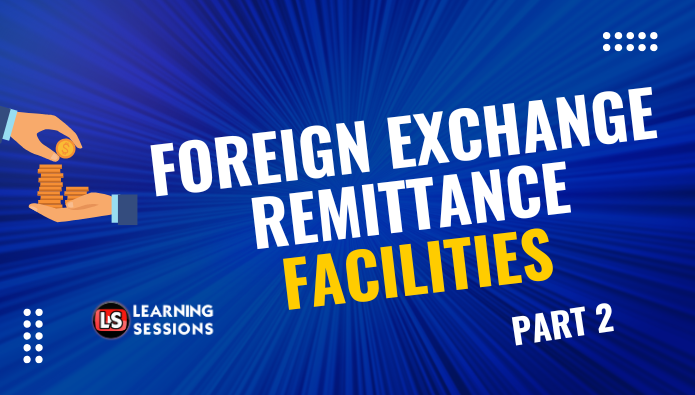
JAIIB PPB | Foreign Exchange Remittance Facilities | Unit 8 Part [FREE EPDF]
🔹 Common Fraudulent Remittance Scams to Avoid (00:27:30)
While carrying out foreign exchange transactions, be alert to the following scams:
- ❌ Fake emails requesting “tax clearance charges“
- ❌ Unsolicited prize-winning notifications demanding payment
- ❌ Scammers posing as RBI officials asking for banking details
🚨 Stay alert and always verify with your bank before making international payments! Genuine RBI or bank communications will never demand personal banking credentials over email or phone.
Conclusion
Understanding FEMA and the rules around foreign exchange transactions is crucial for smooth international transactions. Whether you’re a banker, business owner, or an investor, staying informed helps you avoid penalties and legal issues. For JAIIB aspirants, this topic is a high-scoring area in the Principles and Practices of Banking paper, so thorough revision of FEMA schedules, LRS, and card-based remittance rules is essential.
📢 Got any questions? Drop them in the comments below! Don’t forget to subscribe for more banking insights and hit the 🔔 for updates.
📥 Download the PDF Guide
📩 WhatsApp ‘JAIIB 2026 PDF’ to +918360944207 to receive your copy instantly!